

ΕΠΕΙΔΗ ΚΑΠΟΙΟΙ ΑΚΟΜΑ ΠΙΣΤΕΥΟΥΝ ΟΤΙ ΟΛΑ ΑΥΤΑ ΕΙΝΑΙ ΑΠΟΚΥΗΜΑ ΕΠΙΣΤΗΜΟΝΙΚΗΣ ΦΑΝΤΑΣΙΑΣ...ΑΣ ΔΙΑΒΑΣΟΥΝ ΤΟ ΕΓΧΕΙΡΙΔΙΟ...ΟΤΙ ΒΛΕΠΕΤΕ ΕΔΩ ΕΧΕΙ ΥΙΟΘΕΤΗΘΕΙ ΚΑΤΑ ΓΡΑΜΜΑ ΑΠΟ ΤΟΝ ΟΗΕ, Η ΚΑΛΥΤΕΡΑ, ΕΔΩ ΠΕΡΙΓΡΑΦΕΤΑΙ ΕΠΑΚΡΙΒΩΣ ΤΙ ΑΚΡΙΒΩΣ ΠΕΡΙΜΕΝΕΙ ΤΟΝ ΚΟΣΜΟ ΜΕΤΑ ΤΟ 2030...
Από το 1975, οι φεμινίστριες βοήθησαν στη δημιουργία νέων διεθνών πλαισίων που απαιτούν από τις εθνικές κυβερνήσεις να προωθήσουν την ισότητα των φύλων. Επιτυχία σε αυτό το επίπεδο, γράφει Μάριαν Σόουερ, έσπειρε άθελά του τους σπόρους λαϊκιστικών εκστρατειών ενάντια στην ξένη παρέμβαση στις εθνικές αξίες
Τι είναι η φεμινιστική διακυβέρνηση?
Οι καινοτομίες κυμαίνονται από το σχεδιασμό μη ιεραρχικών μορφών οργάνωσης και παροχής υπηρεσιών στη δεκαετία του 1970, έως τη σημερινή διακρατική εποπτεία των καλών πρακτικών. Ένα συνεχές νήμα ήταν οι συμμετοχικές και χωρίς αποκλεισμούς αξίες που λειτουργούν στα φεμινιστικά δίκτυα που ασχολούνται με τη δημόσια πολιτική, συμπεριλαμβανομένων των εγχώριων και διακρατικών δικτύων υπεράσπισης.
Στην πορεία ήρθαν νέες μεθοδολογίες διαβούλευσης. Αυτά επρόκειτο να διασφαλίσουν ότι διάφορες ομάδες όπως οι μετανάστριες με αναπηρίες είχαν φωνή στις πολιτικές που τις επηρέαζαν. Ο όρος ‘tribetional’ χρησιμοποιήθηκε όλο και περισσότερο για τη συλλογή δεδομένων και τις μορφές διαβούλευσης. Η διαφορετικότητα επρόκειτο να αποτελέσει μέρος της ανάπτυξης πολιτικής και της αξιολόγησης πολιτικής. Στον μακροοικονομικό τομέα, οι παλιές υποθέσεις ότι η δημοσιονομική πολιτική θα είχε τα ίδια αποτελέσματα για άνδρες και γυναίκες δοκιμάστηκαν τώρα, ή τουλάχιστον αμφισβητήθηκαν, αντί να θεωρούνται δεδομένες.
Η φεμινιστική διακυβέρνηση περιλαμβάνει σχέσεις μέσω των οποίων η εξουσία ασκείται και λογοδοτεί
Μέχρι το 1985, 123 χώρες είχαν δημιουργήσει κάποια μορφή κυβερνητικού μηχανισμού για την προώθηση της θέσης των γυναικών. Μέχρι το 1995, η Τέταρτη Παγκόσμια Διάσκεψη για τις Γυναίκες, στο Πεκίνο, έδωσε περαιτέρω ώθηση σε αυτό που οι μελετητές αποκαλούσαν τώρα ‘mainstreaming gender’. Σύντομα, 165 χώρες είχε δημιουργήσει κυβερνητικό μηχανισμό για το σκοπό αυτό. Μέχρι το 2018, ο αριθμός τους είχε ανήλθε στο 192.
Η παγκόσμια διάδοση αυτής της καινοτομίας πολιτικής ήταν πρωτοφανές στην ταχύτητά του. Καινοτομίες όπως οι εκλογικές ποσοστώσεις φύλου, ο προϋπολογισμός φύλου και φεμινιστική εξωτερική πολιτική εξαπλωθεί γρήγορα σε όλο τον κόσμο. Οι διακρατικοί φορείς, τόσο σε διεθνές όσο και σε περιφερειακό επίπεδο, βοήθησαν στον καθορισμό νέων προτύπων δημόσιας πολιτικής για τη δίκαιη ισότητα των φύλων.
Ο ρόλος των διακρατικών φορέων
Σε διεθνές επίπεδο, η Σύμβαση των Ηνωμένων Εθνών για την Εξάλειψη όλων των Μορφών Διακρίσεων κατά των Γυναικών (CEDAW), μαζί με τις διαδικασίες υποβολής εκθέσεων, ήταν ιδιαίτερα σημαντική.
Διεθνή μέσα όπως η Πλατφόρμα Δράσης του Πεκίνου, που εγκρίθηκε ομόφωνα από 189 χώρες το 1995, έχουν συμπληρώσει το διεθνές δίκαιο. Οι μελετητές συχνά το επισημαίνουν ως κορυφαίο σημείο για τη φεμινιστική διακυβέρνηση, αλλά είναι επίσης το σημείο στο οποίο ενισχύθηκε η οργανωμένη αντιπολίτευση.
Εν τω μεταξύ, η λεγόμενη φεμινιστική ‘norm work’ ήταν σε εξέλιξη εντός των υπηρεσιών του ΟΗΕ και εντός των διεθνών θεσμών καθορισμού προτύπων όπως η Διακοινοβουλευτική Ένωση ή ο ΟΟΣΑ.
Εργασία κανόνων συνίσταται στην ανάπτυξη κατευθυντήριων γραμμών και εργαλείων για την εφαρμογή διεθνών (και περιφερειακών) συμφωνιών για την ισότητα των φύλων. Για παράδειγμα, για την προώθηση της ίσης συμμετοχής των γυναικών στη λήψη δημόσιων αποφάσεων, τα εγχειρίδια δείχνουν πώς να λαμβάνουν εκλογικές ποσοστώσεις φύλου αποτελεσματικό και πώς να βεβαιωθείτε ότι ταιριάζουν καλά με το εκλογικό σύστημα.
Η διαδικασία ένταξης στην ΕΕ δείχνει ξεκάθαρα ότι η πρόοδος στην ισότητα των φύλων ήταν μέρος του ‘ticket’ εισόδου των υποψηφίων κρατών μελών
Οι διακρατικοί φορείς έχουν εκπονήσει κατευθυντήριες γραμμές για τον τρόπο ενσωμάτωσης της προοπτικής του φύλου στις δημοσιονομικές διαδικασίες. Αυτό τους έχει κάνει βασικό παίκτη στην προώθηση του gender budgeting. Η διακρατική παρακολούθηση και η συγκριτική αξιολόγηση είναι σημαντικές για την άσκηση πίεσης από ομοτίμους σε – μια διαδικασία που μερικές φορές ονομάζεται ‘soft regulation’.
Regional governance bodies such as the European Union have more power than the soft regulation of standard-setting institutions. These regional bodies play a particularly important role in disseminating feminist governance innovation. The EU accession process shows clearly that progress on gender equality has been part of the ‘entry ticket’.
The varieties of opposition
In the mid-1990s, co-ordinated opposition to feminist policy influence emerged in different parts of the world and transnationally. Feminists were perceived to have achieved undue influence, particularly within transnational governance bodies seen as interfering with the sovereignty and values of nation states.
The sources of opposition were multiple but included different forms of organised religion. The Vatican led the way in opposing use of the term gender in international agreements such as the Beijing Platform for Action. It considered that conceptualising gender as a socially constructed rather than biological reality violated the natural complementarity of the sexes.
The Vatican opposed use of the term 'gender' in international agreements on the basis that conceptualising gender as a social construct violated the natural complementarity of the sexes
In the USA, the religious right joined in this ‘anti-gender’ mobilisation and reached out to other faith-based groups. The World Congress of Families held its first conference in Prague in 1997. The International Organization for the Family aimed at ‘uniting and equipping leaders worldwide to promote the natural family’. In 2015 Belarus, Egypt and Qatar launched the Group of Friends of the Family. It brought Muslim member states together with Russia, Belarus and the Holy See for joint action at the UN.
From another direction, radical-right populist movements were depicting the European Union as imposing alien values and feminist ideology on their countries. In the United States, the Trump administration strove to comb out words such as gender. So zealous were its efforts that a former official claimed ‘We are now aligned with Russia on family issues’.
Pushing back against feminist governance
At the regional level, norms of feminist governance become legally binding through treaties and conventions. The Organization of American States' Inter-American Convention on the Prevention, Punishment, and Eradication of Violence against Women (the Belém do Pará Convention) was adopted in 1994. The African Union’s Maputo Protocol followed in 2003, and the Council of Europe’s Istanbul Convention in 2011.
Such conventions, and the national legislation flowing from them, link violence against women to gender inequality. Thus, their detractors claim they are ‘acting against the family’. While 38 European countries have ratified the Istanbul Convention, resistance has mounted. Countries in Central and Eastern Europe are now refusing to ratify, and Türkiye has withdrawn from the Convention.
Populist opposition to the Istanbul Convention has identified gender equality with the imposition of foreign norms. It is a clear illustration of the risks of feminist success at the transnational level of governance. To resist erosion and loss, a first step is to increase awareness of what has been achieved, not just its limitations. An emerging literature is doing just that.
Since 1975, feminists have helped establish new international frameworks requiring national governments to promote gender equality. Success at this level, writes Marian Sawer, inadvertently sowed the seeds of populist campaigns against foreign interference with national values
What is feminist governance?
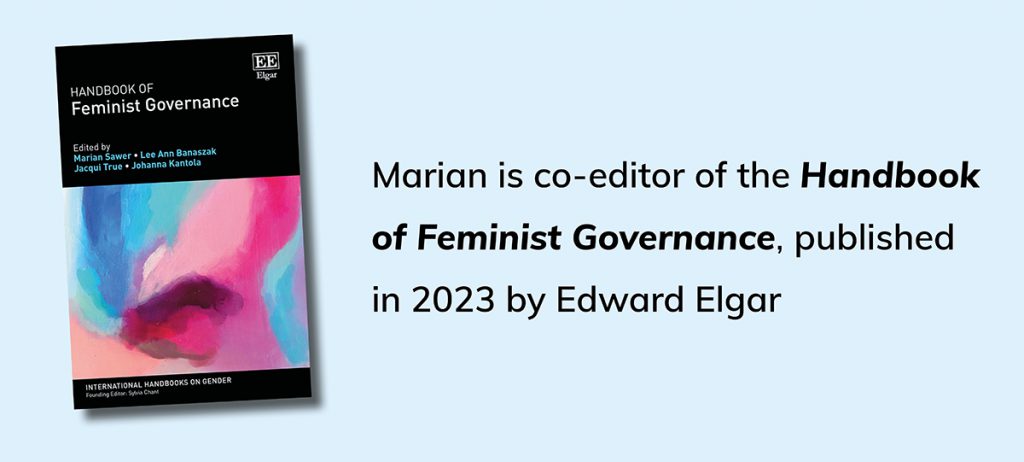
In an era of democratic backsliding, it is particularly important to be aware of what feminist governance has contributed to democracy. As explained in the Handbook of Feminist Governance, the term covers all the processes of government, from formal to informal. Feminist governance includes relationships through which authority is both exercised and held to account.
Innovations range from the design of non-hierarchical forms of organising and service delivery in the 1970s, to today’s transnational oversight of good practice. A continuing thread has been the participatory and inclusive values operationalised in the feminist networks engaging with public policy, including domestic and transnational advocacy networks.
Along the way came new methodologies of consultation. These were to ensure that diverse groups such as immigrant women with disabilities had voice in the policies that affected them. The term ‘intersectional’ was increasingly used for data collection and forms of consultation. Diversity was to be part of policy development and policy evaluation. In the macroeconomic area, old assumptions that budgetary policy would have the same effects for men and women were now tested, or at least challenged, rather than taken for granted.
Feminist governance includes relationships through which authority is both exercised and held to account
By 1985, 123 countries had established some form of government machinery to advance the status of women. By 1995, The Fourth World Conference on Women, in Beijing, provided further impetus for what scholars now called ‘gender mainstreaming’. Soon, 165 countries had established government machinery for this purpose. By 2018, their number had risen to 192.
The global diffusion of this policy innovation was unprecedented in its rapidity. Innovations such as gender electoral quotas, gender budgeting and feminist foreign policy spread quickly around the world. Transnational bodies, both at the international and regional level, helped set new standards of gender equitable public policy.
The role of transnational bodies
At international level, the United Nations Convention on the Elimination of All Forms of Discrimination against Women (CEDAW), together with its reporting processes, has been particularly important.
International instruments such as the Beijing Platform for Action, adopted unanimously by 189 countries in 1995, have supplemented international law. Scholars often point to this as a high point for feminist governance, but it is also the point at which organised opposition stepped up.
In the meantime, so-called feminist ‘norm work’ was ongoing within UN agencies and within international standard-setting institutions such as the Inter-Parliamentary Union, or the OECD.
Norm work consists of the development of guidelines and toolkits for implementing international (and regional) gender equality agreements. For example, to promote equal participation of women in public decision-making, handbooks show how to make gender electoral quotas effective, and how to make sure they are a good fit with the electoral system.
The EU accession process shows clearly that progress on gender equality has been part of member state candidates' ‘entry ticket’
Transnational bodies have produced guidelines on how to integrate a gender perspective into budgetary processes. This has made them a key player in the promotion of gender budgeting. Transnational monitoring and benchmarking are important in bringing peer pressure to bear – a process sometimes called ‘soft regulation’.
Regional governance bodies such as the European Union have more power than the soft regulation of standard-setting institutions. These regional bodies play a particularly important role in disseminating feminist governance innovation. The EU accession process shows clearly that progress on gender equality has been part of the ‘entry ticket’.
The varieties of opposition
In the mid-1990s, co-ordinated opposition to feminist policy influence emerged in different parts of the world and transnationally. Feminists were perceived to have achieved undue influence, particularly within transnational governance bodies seen as interfering with the sovereignty and values of nation states.
The sources of opposition were multiple but included different forms of organised religion. The Vatican led the way in opposing use of the term gender in international agreements such as the Beijing Platform for Action. It considered that conceptualising gender as a socially constructed rather than biological reality violated the natural complementarity of the sexes.
The Vatican opposed use of the term 'gender' in international agreements on the basis that conceptualising gender as a social construct violated the natural complementarity of the sexes
In the USA, the religious right joined in this ‘anti-gender’ mobilisation and reached out to other faith-based groups. The World Congress of Families held its first conference in Prague in 1997. The International Organization for the Family aimed at ‘uniting and equipping leaders worldwide to promote the natural family’. In 2015 Belarus, Egypt and Qatar launched the Group of Friends of the Family. It brought Muslim member states together with Russia, Belarus and the Holy See for joint action at the UN.
From another direction, radical-right populist movements were depicting the European Union as imposing alien values and feminist ideology on their countries. In the United States, the Trump administration strove to comb out words such as gender. So zealous were its efforts that a former official claimed ‘We are now aligned with Russia on family issues’.
Pushing back against feminist governance
At the regional level, norms of feminist governance become legally binding through treaties and conventions. The Organization of American States' Inter-American Convention on the Prevention, Punishment, and Eradication of Violence against Women (the Belém do Pará Convention) was adopted in 1994. The African Union’s Maputo Protocol followed in 2003, and the Council of Europe’s Istanbul Convention in 2011.
Such conventions, and the national legislation flowing from them, link violence against women to gender inequality. Thus, their detractors claim they are ‘acting against the family’. While 38 European countries have ratified the Istanbul Convention, resistance has mounted. Countries in Central and Eastern Europe are now refusing to ratify, and Türkiye has withdrawn from the Convention.
Populist opposition to the Istanbul Convention has identified gender equality with the imposition of foreign norms. It is a clear illustration of the risks of feminist success at the transnational level of governance. To resist erosion and loss, a first step is to increase awareness of what has been achieved, not just its limitations. An emerging literature is doing just that.
Author

Marian is a former leader of the Democratic Audit of Australia and has published widely on electoral management, gender, politics and policy and the practices of representative democracy.
She is currently leading (with Anika Gauja and Jill Sheppard) the Australian federal election series auspiced by the Academy of the Social Sciences in Australia, including studies of the 2019 and 2022 elections (the latter now in press).
She has been responsible for initiatives at both national and international levels to make political science more gender responsive and inclusive.
Morrison's Miracle: The Australian Federal Election
ANU Press, 2020
Gender Innovation in Political Science: New Norms, New Knowledge
Palgrave Macmillan, 2019
ITS NOT DEAD YET...JUST WOUNDED AND PISSED OFF...ΑΦΙΕΡΩΜΑ (ΦΕΜΙΝΙΣΜΟΣ-WOKE-NWO)
FEMINIST FOREIGN POLICY:SOLUTIONS FOR A BETTER TOMORROWBackground paper of the III Ministerial Conference on Feminist Foreign Policies
Why do feminist women act like this?pic.twitter.com/vDUQRqU6BB
— Anti Woke Memes (@AntiWokeMemes) June 19, 2025
Protest in France. Do you agree with them? pic.twitter.com/v0ScnyN79E
— RadioGenoa (@RadioGenoa) October 25, 2024
Damn, how could the patriarchy allow this? 😜 pic.twitter.com/gDdCYSkzCa
— Blueblur (@Blueblur2023) December 23, 2024
— Gender Studies for Men (@JohnDavisJDLLM) August 15, 2024
Faceof...
Is having women as leaders of nations a good idea? pic.twitter.com/YX5pPt6fVi
— Felix Rex (@navyhato) December 20, 2024

Δεν υπάρχουν σχόλια:
Δημοσίευση σχολίου